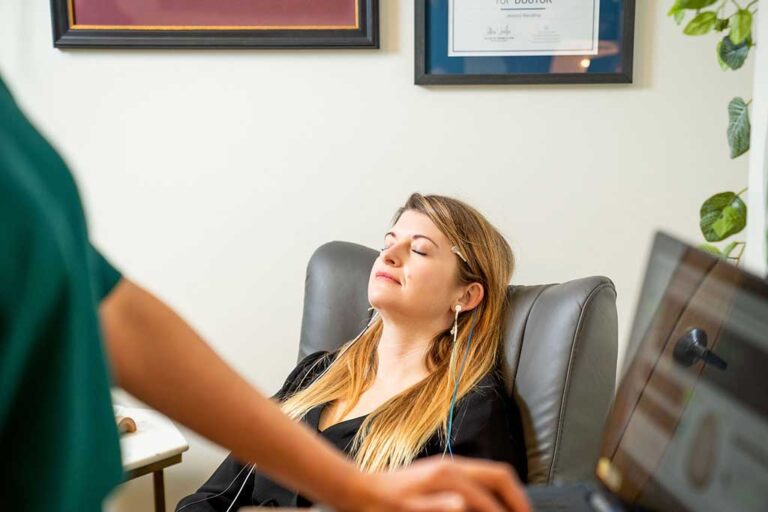
We start with an in-depth conversation about your symptoms, health history, and goals. This allows us to determine whether neurofeedback is the right approach for your needs.

Neurofeedback is a non-invasive form of brain training that helps the nervous system regulate more efficiently. Rather than stimulating or forcing change, it provides real-time feedback about brainwave activity so the brain can gradually learn more stable patterns on its own.
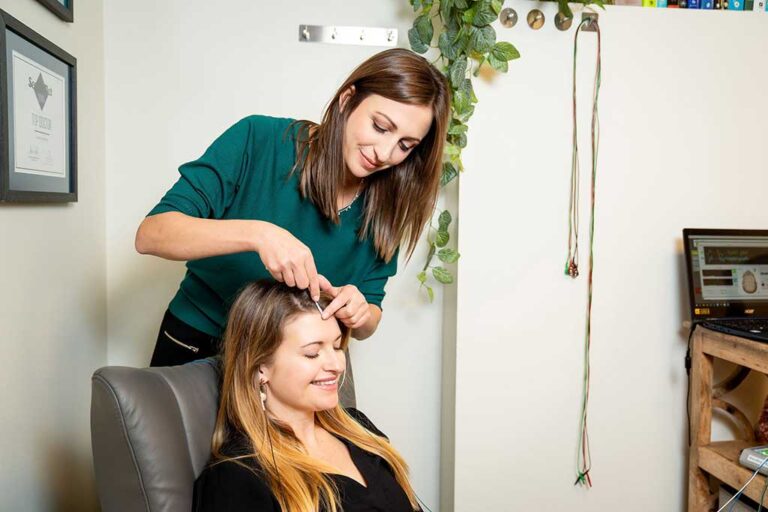
During a session, small sensors are placed on the scalp to monitor brain activity. You watch or listen to simple feedback signals while your brain responds in real time. When brain activity shifts toward more regulated patterns, the feedback continues. Over time, this process supports improved self-regulation.
For older adults, the focus is not on reversing aging or treating degenerative disease. Instead, neurofeedback helps calm overactivation, reduce stress reactivity, and support clearer, steadier mental functioning.
Many cognitive concerns in older adulthood are not caused by structural decline, but by chronic stress patterns and nervous system imbalance. When the brain remains in a heightened or depleted state, it can affect clarity, sleep, and emotional steadiness.
You may benefit from a regulation-focused evaluation if you experience:
Each individual begins with an assessment to understand current cognitive function, emotional regulation, and brainwave patterns. This evaluation guides the training protocol. Here’s what to expect at each stage:
We start with an in-depth conversation about your symptoms, health history, and goals. This allows us to determine whether neurofeedback is the right approach for your needs.

Your first visit includes a comprehensive assessment of your health and lifestyle, followed by your first neurofeedback session to evaluate your response. Many clients notice changes within 24–48 hours.
Neurofeedback for older adults may be appropriate if you:
In these cases, cognition is often affected by stress physiology rather than progressive neurological disease.
We do not treat or reverse degenerative neurological conditions such as Alzheimer’s disease, advanced dementia, or progressive neurodegenerative disorders.
If memory loss is rapidly progressing, significantly impairing daily functioning, or related to a known neurological diagnosis, medical evaluation with a neurologist is recommended.
Our work focuses on regulation-based cognitive disruption — not structural neurodegeneration.
A consultation helps determine whether neurofeedback is an appropriate fit.